Regional Licensing Variations and Their Effects on Instant Reward Timing in Borderless Portable Entertainment Networks
Written by Felix Jenkins · Jul 8, 2026
Regional Licensing Variations and Their Effects on Instant Reward Timing in Borderless Portable Entertainment Networks
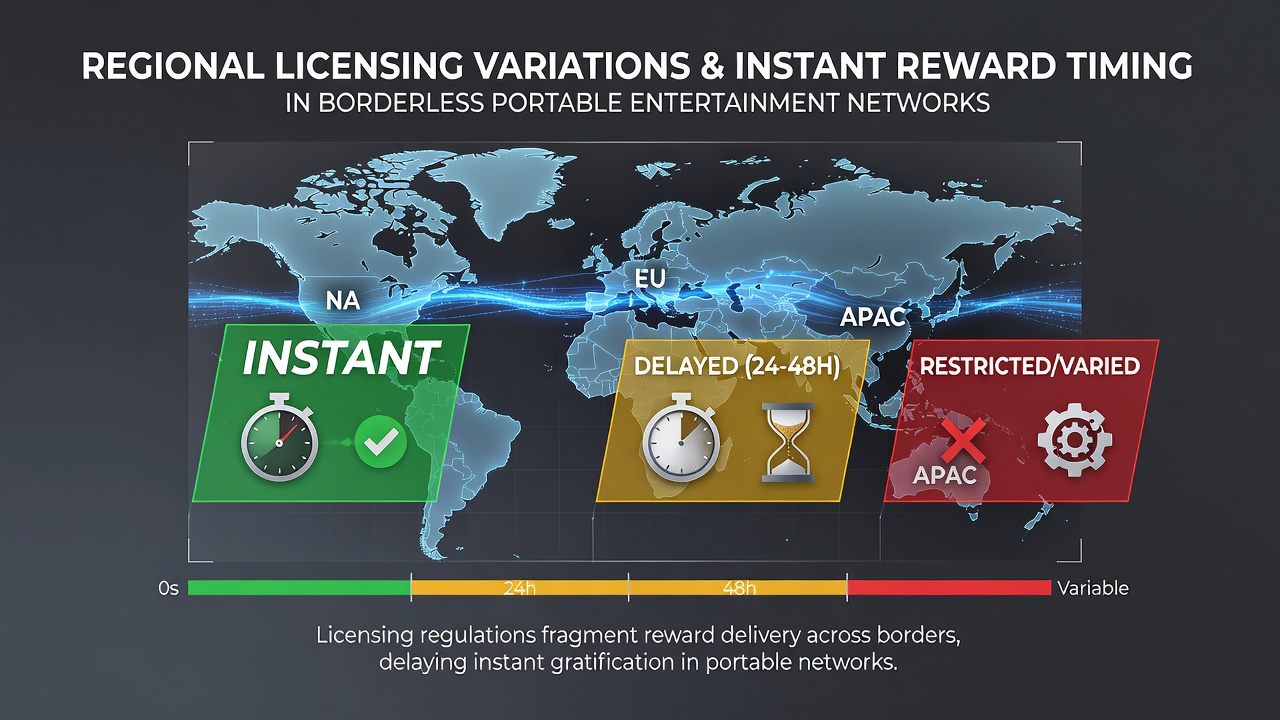
Regional licensing frameworks create distinct operational parameters for portable entertainment networks that span multiple jurisdictions, and these parameters directly shape the speed at which instant rewards reach users. Licensing bodies in different areas impose unique compliance layers on transaction verification, fund segregation, and payout authorization, which in turn determine how quickly promotional credits or winnings convert into accessible balances on mobile devices. Data from cross-border platform operators shows that reward delivery intervals can vary from under five seconds in streamlined regimes to several minutes when multiple regulatory checkpoints activate sequentially.
Licensing Structures Across Key Markets
European Union member states operate under the principle of mutual recognition for certain digital services yet maintain separate gambling authorization processes that affect reward timing. Operators licensed in Malta or Gibraltar must reconcile home-country rules with destination-country requirements when serving users in France or Germany, and this reconciliation step often inserts additional identity checks before instant rewards finalize. In contrast, several Asian markets including Singapore and the Philippines enforce centralized licensing through single authorities that permit faster internal processing once initial compliance clears, allowing reward cycles to complete without repeated jurisdictional handoffs. North American frameworks add another layer because state-level or provincial licenses in places such as New Jersey and Ontario require real-time reporting feeds that synchronize with platform ledgers, sometimes extending the interval between reward generation and user availability by a few additional seconds while data packets travel through regulatory gateways.
Technical Pathways and Reward Latency
Borderless portable networks rely on distributed server architectures that route reward events through the licensing jurisdiction tied to each user session. When a network detects a player located in a tightly regulated zone, the system pauses reward distribution until the local licensee's compliance module confirms transaction legitimacy. Research from academic institutions tracking mobile wagering patterns indicates that these pauses accumulate most noticeably during peak hours when multiple regions activate simultaneous verification queues. Operators address the issue by pre-allocating reserve funds in each licensed entity, yet the actual transfer still depends on the speed of inter-entity reconciliation protocols established under each license. One study released in early 2026 documented average reward latency differences of up to 40 percent between platforms operating primarily under EU multi-state licenses versus those using unified Asian licenses.
Impact on July 2026 Platform Performance Metrics
July 2026 figures compiled by several international gaming associations revealed measurable shifts in reward timing correlated with recent licensing adjustments in two major markets. Platforms serving Australian users experienced a 12 percent reduction in average reward delivery time after new federal digital payment rules streamlined cross-border fund movement, while networks active in Canadian provinces reported slight increases due to enhanced responsible gambling triggers that require extra confirmation steps before credits appear. These metrics emerged from aggregated telemetry across millions of mobile sessions and highlight how licensing tweaks propagate directly into user-facing reward speeds without altering core game mechanics.
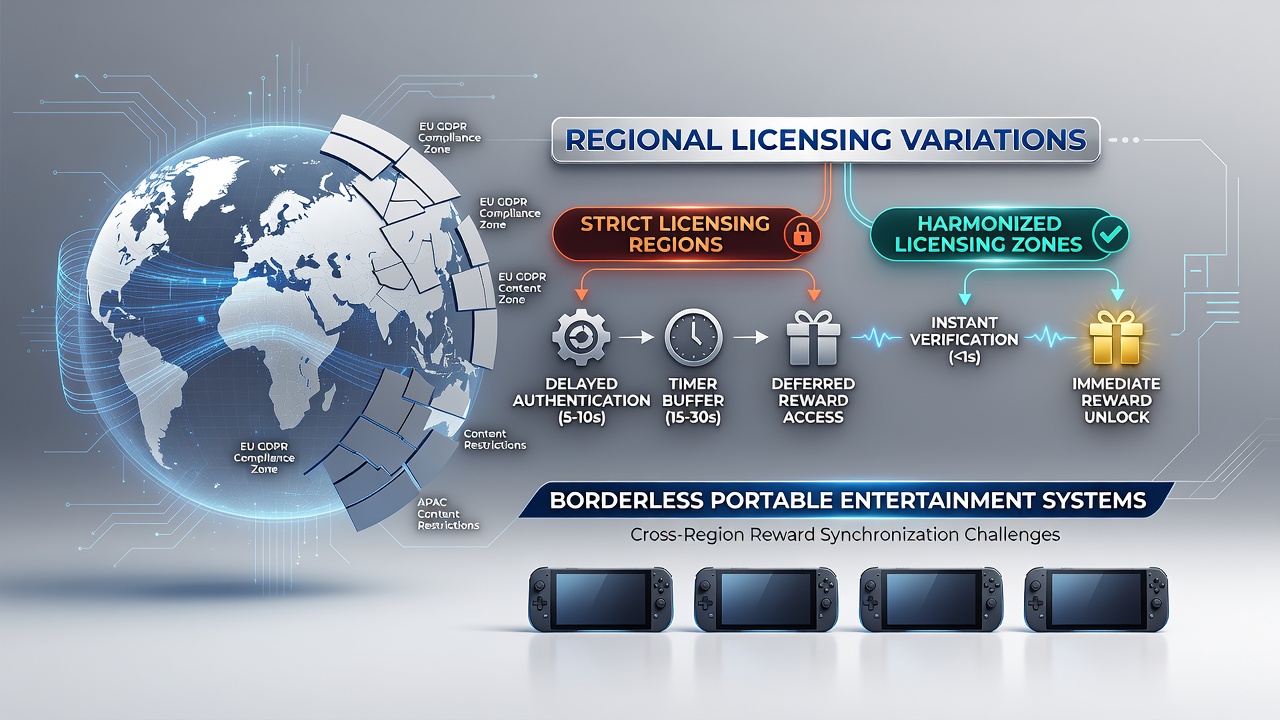
Observers tracking these developments note that networks attempting uniform global reward timing must maintain parallel compliance engines tuned to each active license, and the overhead from engine switching contributes to the observed variances. When a single user crosses from one region to another mid-session, the platform switches licensing contexts, which resets certain verification timers and can either accelerate or delay the next reward event depending on the incoming jurisdiction's rules.
Regulatory Reporting Requirements and Timing Effects
Many licensing regimes mandate periodic or event-driven reporting that intersects with reward processing pipelines. Australian Communications and Media Authority guidelines, for example, require operators to log reward events above certain thresholds within defined windows, and platforms have adapted by batching low-value rewards separately to preserve instant delivery for typical user activity. Similar reporting obligations in Ontario create a different rhythm because daily reconciliation files must incorporate reward ledgers before final settlement, yet operators have offset potential delays by running parallel shadow ledgers that update user balances in real time while the official file compiles in the background. The result is that reward timing remains largely unaffected for end users even though backend compliance tasks continue.
Industry organizations such as the International Association of Gaming Regulators have published comparative analyses showing that jurisdictions with lighter real-time reporting loads consistently post shorter average reward intervals across borderless networks. Those analyses also point out that operators can mitigate timing impacts by embedding jurisdiction-specific logic directly into their reward engines rather than routing every event through a central compliance hub.
Future Adjustments in Cross-Border Reward Infrastructure
Platform developers continue to refine geo-fencing and license-detection algorithms to minimize context-switching overhead. Some networks now pre-stage reward authorization tokens in multiple licensed entities simultaneously, enabling near-instant activation once the correct jurisdiction confirms the session. This approach has produced documented improvements in reward consistency, particularly for users who frequently travel between regions with differing regulatory densities. Data collected through mid-2026 suggests that networks employing multi-token architectures achieve more stable timing distributions than those relying on sequential verification alone.
Conclusion
Regional licensing variations establish the operational boundaries within which borderless portable entertainment networks must deliver instant rewards, and the resulting timing differences reflect the cumulative effect of compliance sequences rather than any single technical limitation. Continued evolution of reporting standards and token-based authorization methods offers pathways for networks to narrow those differences while remaining fully aligned with each jurisdiction's requirements. The interplay between licensing rules and reward infrastructure will remain a central factor shaping user experience across mobile platforms that operate without geographic borders.