Mapping Content Update Timelines Against Licensing Review Periods in Web-Based Amusement Services
Written by Lars Hartmann · Jul 29, 2026
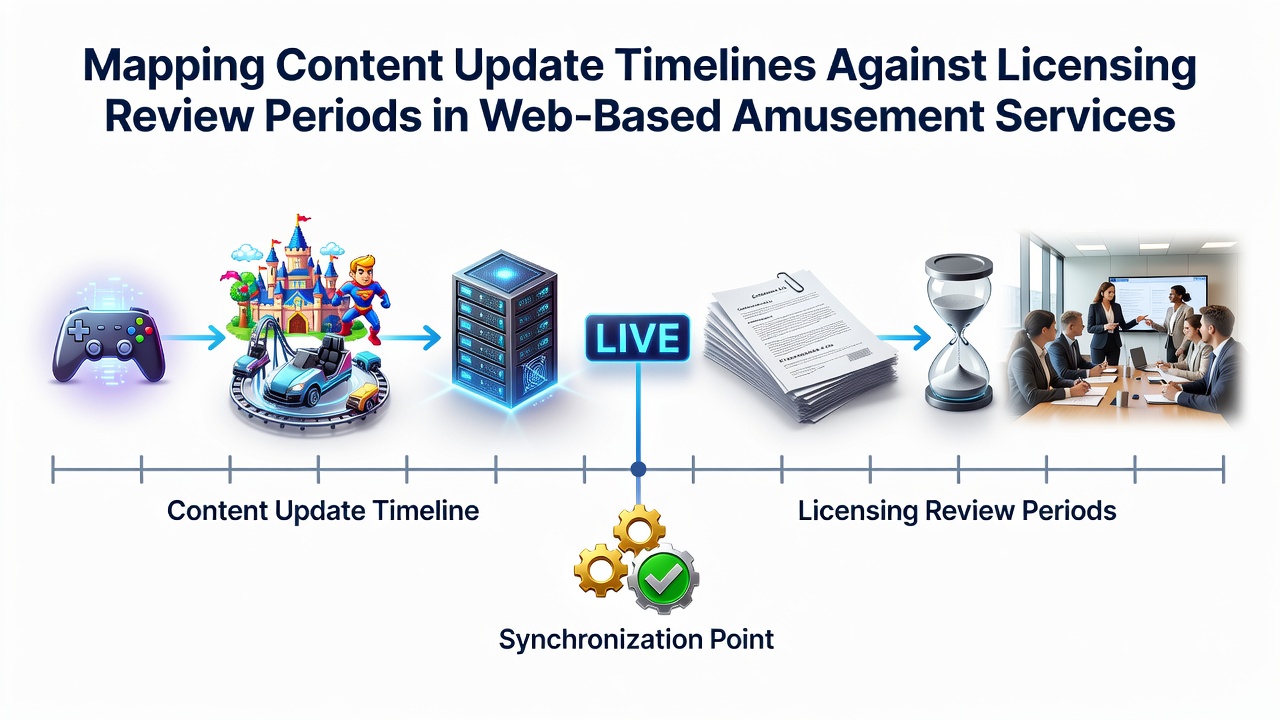
Mapping Content Update Timelines Against Licensing Review Periods in Web-Based Amusement Services
Web-based amusement services operate under strict licensing frameworks that dictate when operators may introduce new content such as game titles, features, or interface changes. These frameworks require operators to align their internal development schedules with external review periods set by regulatory bodies across multiple jurisdictions. Mapping these timelines involves charting software release cycles against the duration of compliance checks, approval queues, and renewal deadlines that vary by region and license type.
Regulatory Structures and Their Impact on Update Planning
Operators in the United States coordinate with state-level agencies such as the Nevada Gaming Control Board and the New Jersey Division of Gaming Enforcement, where review periods for content modifications typically range from 30 to 90 days depending on the complexity of the change. European operators follow directives from national authorities including the Malta Gaming Authority and the Swedish Gambling Authority, which impose staggered submission windows that can extend up to 120 days for major platform revisions. Data from the International Association of Gaming Regulators indicates that jurisdictions with centralized digital submission portals reduce average review times by 25 percent compared with paper-based systems.
Content teams must therefore build buffer periods into their roadmaps. A slot game update scheduled for release in one market may require simultaneous submissions across several regulators, each operating on independent calendars. Failure to synchronize these submissions often results in staggered launches that fragment the user experience and delay revenue recognition for the operator.
Methods for Aligning Development Cycles with Review Windows
Project managers use Gantt-style overlays that plot internal milestones against regulatory deadlines. These overlays highlight critical path items such as third-party certification testing, which itself consumes 14 to 21 days before a regulator even begins formal review. Teams track submission cut-off dates through shared dashboards that flag upcoming licensing renewals six months in advance, allowing time for content freezes during active review periods.
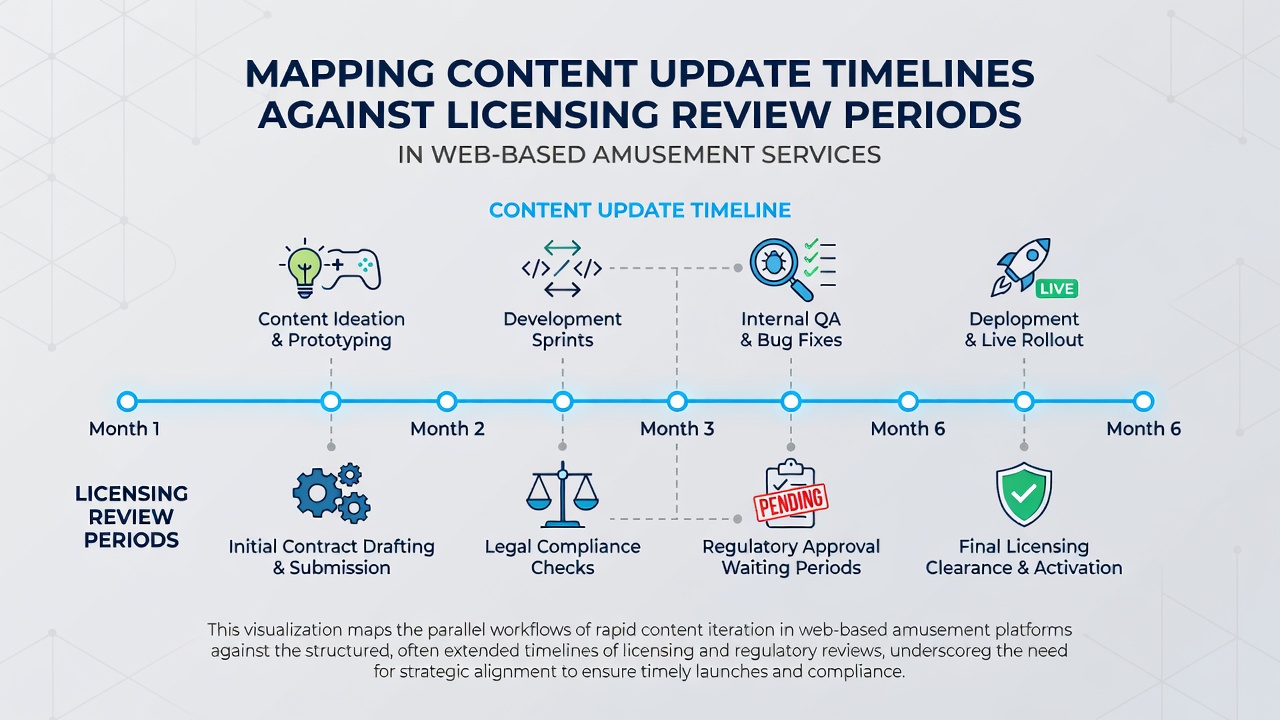
Some operators segment their content libraries by regulatory tier. Games cleared under lighter-touch regimes receive faster iteration cycles, while titles destined for stricter markets undergo longer stabilization phases. This tiered approach appears in platform architectures that maintain separate code branches, each tagged with jurisdiction-specific compliance flags. Analysts at research institutions such as the University of Nevada, Las Vegas have documented how such branching reduces last-minute revision requests by nearly 40 percent.
July 2026 Developments in Digital Submission Standards
July 2026 marks the scheduled rollout of enhanced API endpoints by several North American regulators. These endpoints allow real-time status queries during the review process, replacing periodic email updates that previously left operators guessing about queue position. Early adopters report that the new interfaces shorten effective review durations by providing automated alerts when additional documentation is required, thereby preventing full restarts of the approval sequence.
Parallel updates in the Asia-Pacific region include Singapore's Infocomm Media Development Authority, which introduced mandatory digital audit trails for all content modifications. Operators must now log every code commit and asset change in tamper-evident repositories that regulators can access directly, eliminating the need for separate evidence packages during routine inspections.
Case Examples of Timeline Mapping in Practice
One North American operator synchronized a seasonal promotion update across three states by submitting identical code packages on staggered dates that matched each agency's intake windows. The approach required maintaining identical build versions for 11 weeks, during which no further code changes were permitted. The result was a simultaneous launch that avoided market-specific delays.
Another example involves a European platform that mapped its quarterly feature rollouts against the Maltese and Swedish calendars simultaneously. By inserting a four-week stabilization buffer between internal QA completion and first submission, the operator avoided the common bottleneck where certification labs become backlogged ahead of major sporting events.
Conclusion
Effective mapping of content update timelines against licensing review periods reduces launch fragmentation and maintains compliance across jurisdictions. Operators achieve this through structured overlays, tiered code management, and adoption of emerging digital submission tools. As regulatory bodies continue to digitize their processes, the precision of these alignments will determine how quickly new amusement experiences reach users while satisfying oversight requirements.