Demographic Evolution in Digital Entertainment Platforms Drives Adjustments in Customization Protocols
Written by Henrik Bauer · Jun 22, 2026
Demographic Evolution in Digital Entertainment Platforms Drives Adjustments in Customization Protocols
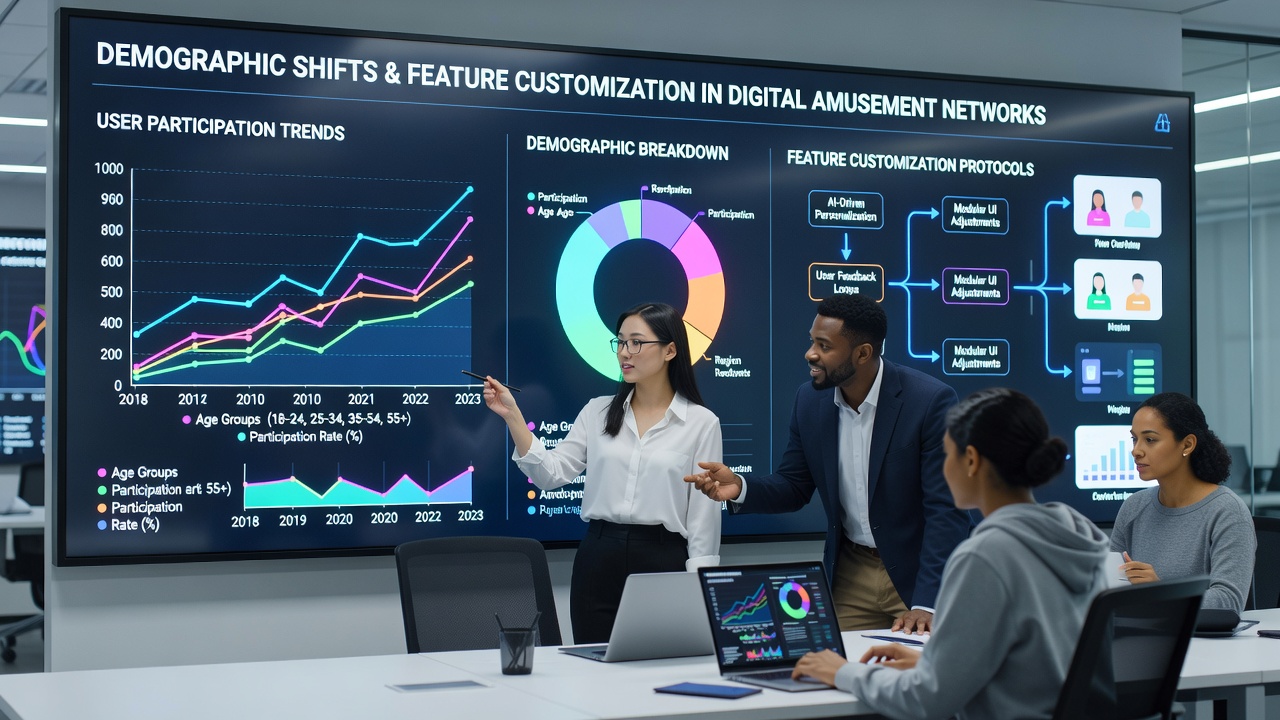
Digital amusement networks have expanded rapidly since the early 2020s, and participation patterns now reflect broader population changes across age groups, regions, and socioeconomic segments. Researchers tracking these networks note that user bases once dominated by younger males have incorporated larger shares of older adults, women, and participants from emerging markets in Asia and Latin America. These movements influence how platforms develop and deploy customization protocols for interfaces, content recommendations, and interaction tools.
Tracking Participation Changes Across Platforms
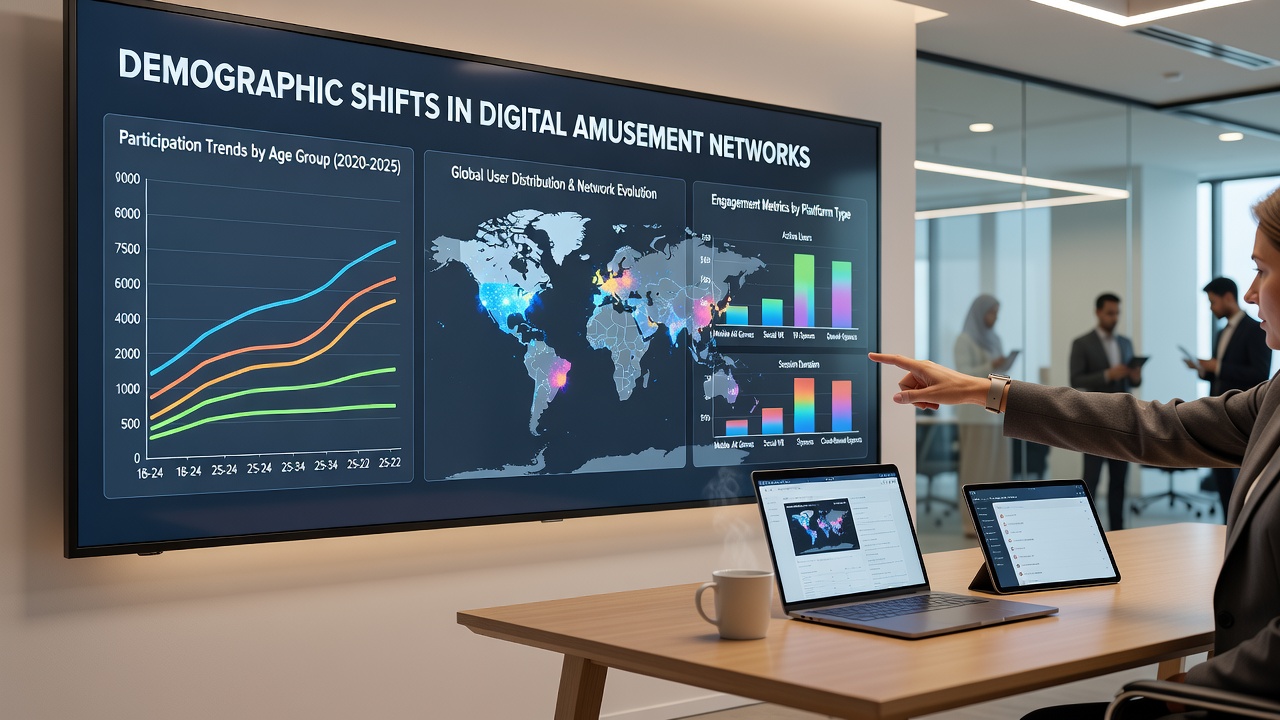
Data collected through industry reports and national statistical agencies shows steady growth in users aged 45 and above on major streaming and interactive entertainment services. According to figures released by the Entertainment Software Association in early 2026, adults in that bracket accounted for 28 percent of total engagement hours on multiplayer and social gaming applications. Meanwhile participation from users in urban centers of Southeast Asia rose by 19 percent between 2023 and 2025, driven by improved mobile infrastructure and localized content libraries.
Gender distribution has also shifted. Platforms report that female users now represent 47 percent of active accounts on collaborative entertainment services, up from 39 percent five years earlier. Observers note that these increases coincide with expanded options for avatar design, community moderation settings, and narrative branching that accommodate varied preferences rather than a single demographic profile.
Regional and Socioeconomic Influences on Network Growth
Participation from lower-income households has grown in countries with strong public broadband initiatives. Statistics Canada documented a 14 percent rise in monthly active users from households earning below the national median between 2024 and 2026. Similar patterns appear in Australia, where the Bureau of Communications, Arts and Regional Research recorded higher engagement rates among regional populations after subsidized device programs expanded access.
These demographic movements create pressure on feature customization systems. Algorithms trained primarily on historical data from one cohort require retraining when new groups arrive with distinct usage rhythms and content priorities. Platform developers respond by introducing modular settings that let individuals adjust notification frequency, visual density, and social matching parameters without altering the core experience for others.
Adjustments to Customization Protocols
Customization protocols now incorporate real-time demographic weighting. When a platform detects a surge in users over 50 from specific regions, it activates optional larger text sizes, simplified menu structures, and slower-paced tutorial sequences. One European study published in 2025 found that such targeted adjustments increased session retention by 22 percent among the newly represented age group while leaving younger users unaffected.
Content recommendation engines have adopted similar layering. Instead of a single ranking model, many services maintain parallel models that activate based on self-reported or inferred attributes. This approach allows platforms to surface educational documentaries to one segment and competitive strategy titles to another without requiring separate applications. As of June 2026, several major providers announced plans to expand these parallel models to cover language preferences and accessibility needs simultaneously.
Technical Implementation and Data Considerations
Engineers achieve these layered protocols through feature flags and segmented A/B testing frameworks. Each new demographic cohort receives its own test bucket during rollout phases, which limits unintended effects on established user groups. Privacy regulations in multiple jurisdictions require explicit consent before demographic attributes feed into recommendation logic, prompting companies to store preference data locally on devices rather than in centralized profiles.
Security teams also update authentication flows to accommodate diverse device types common among newer participant groups. Older smartphones prevalent in certain markets receive lighter authentication options that maintain security standards while reducing load times. These changes emerge directly from usage analytics rather than top-down design decisions.
Conclusion
Demographic shifts continue to reshape participation across digital amusement networks, and customization protocols adapt through modular design, segmented modeling, and consent-based data handling. Organizations monitoring these trends rely on ongoing input from statistical agencies and academic researchers to keep systems aligned with evolving user bases. The process remains iterative, with each new wave of participants prompting further refinements to interface options and content delivery mechanisms.