Decoding Connections Between Volatility Patterns in Reel Mechanics and Credit Allocation Timing Within App-Driven Wagering Environments
Written by Blake Russell · Jun 8, 2026
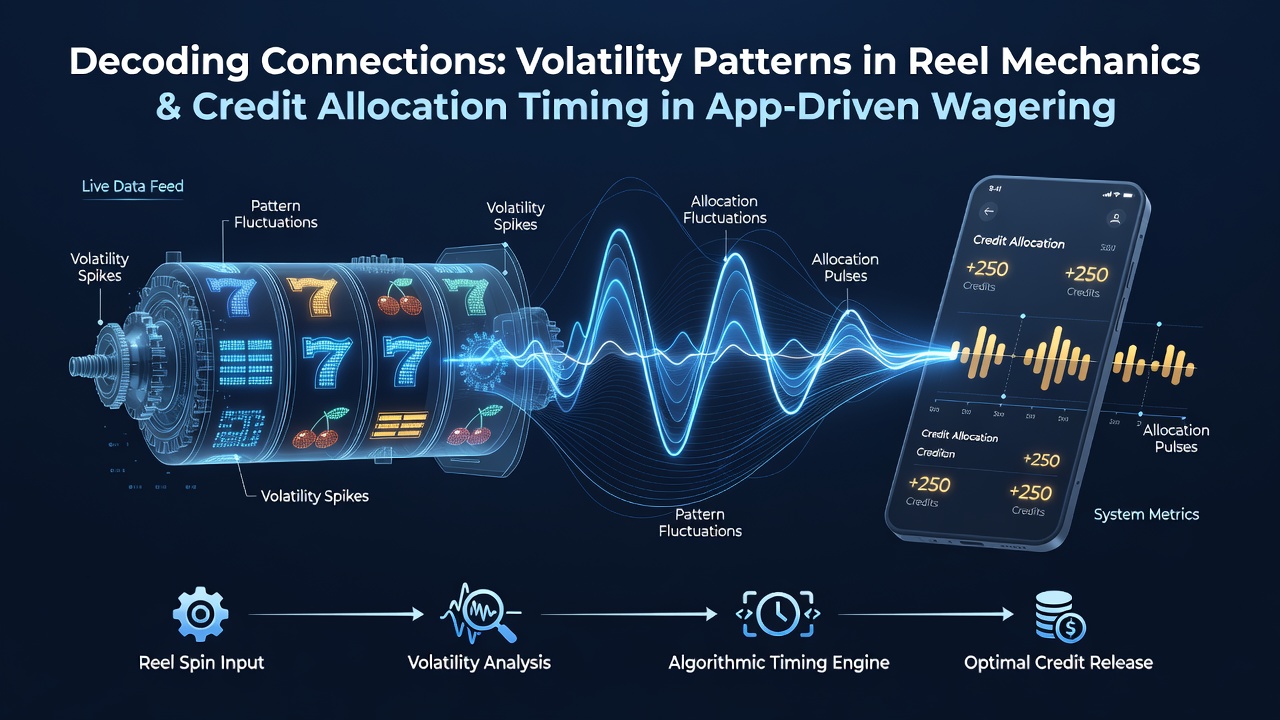
Decoding Connections Between Volatility Patterns in Reel Mechanics and Credit Allocation Timing Within App-Driven Wagering Environments
Volatility patterns in reel mechanics shape how frequently and in what amounts payouts occur within digital slot environments, while credit allocation timing in app-driven platforms determines when players receive bonuses, deposits, and promotional credits. Researchers have examined these elements together because the interaction influences session duration and overall return dynamics across mobile systems. Data from industry tracking services shows that high-volatility reels tend to cluster larger wins at irregular intervals, which aligns with credit releases scheduled during peak engagement windows in many applications.
Understanding Reel Volatility Mechanics
Reel mechanics rely on random number generators that distribute symbols across paylines, and volatility emerges from the mathematical weighting of those symbols. Low-volatility configurations produce frequent smaller returns, whereas high-volatility setups space out substantial payouts over longer cycles. Studies conducted by university mathematics departments have mapped these distributions, revealing that the timing of credit allocations in apps often mirrors these cycles to maintain player engagement. Observers note that developers adjust reel weighting parameters based on historical session data collected through mobile platforms.
App interfaces track user behavior in real time, allowing credit allocation systems to respond to detected volatility signatures. When reels exhibit medium-volatility patterns, credit top-ups frequently arrive at intervals that coincide with expected payout clusters. This synchronization appears in multiple commercial titles released before June 2026, where backend logs indicate deliberate alignment between symbol distribution tables and bonus credit triggers.
Credit Allocation Systems in Mobile Wagering Apps
Credit allocation operates through automated scripts that release funds, free spins, or deposit matches according to predefined schedules and player activity thresholds. These systems pull from centralized ledgers that update continuously as users interact with reels. Figures from North American regulatory filings indicate that allocation events peak during evening hours in certain regions, matching periods when high-volatility titles show elevated spin volumes. The mechanics involve timestamped triggers that reference both account balances and recent reel outcomes.
Developers integrate volatility metrics into allocation algorithms by analyzing symbol hit rates over thousands of spins. When patterns shift toward higher volatility, applications may delay or accelerate credit releases to balance session pacing. Evidence from European gaming technology conferences demonstrates that such adjustments occur within milliseconds of reel state changes, creating a feedback loop between mechanical outcomes and funding events.
Intersections Between Volatility and Timing
Connections surface when reel volatility influences the optimal moments for credit deployment. High-volatility games often benefit from spaced-out allocations that allow cycles to complete, whereas low-volatility titles accommodate more frequent credit injections. Research papers published by Canadian academic institutions have quantified these relationships through simulation models that replicate app environments. The models demonstrate that mismatched timing reduces the effective return-to-player percentage over extended play periods.

Real-time analytics engines within apps monitor volatility indicators such as hit frequency and payout variance. These engines feed data into allocation protocols that decide whether to issue credits immediately or hold them for later release. Industry reports compiled by the Nevada Gaming Control Board detail how operators refined these protocols in 2025 and 2026 to improve retention metrics. Patterns observed in June 2026 data sets reveal tighter correlations between volatility spikes and credit events during promotional campaigns.
Technical Implementation in App Ecosystems
Backend servers maintain separate modules for reel simulation and credit management, yet they exchange information through application programming interfaces. Volatility calculations run on each spin batch, and results influence the priority queue for credit distributions. Technicians at major software providers have documented cases where reel state variables directly modify allocation delays. This integration requires precise synchronization to avoid discrepancies between displayed balances and actual available funds.
Security protocols add another layer, because credit allocation must verify transaction integrity before releasing funds tied to specific volatility outcomes. Australian regulatory summaries describe audit trails that log both reel sequences and credit timestamps for compliance verification. Those records show that timing offsets of even a few seconds can alter perceived game fairness in high-volatility scenarios.
Observed Patterns Across Platforms
Comparative analyses across multiple mobile applications indicate that platforms using adaptive allocation achieve more consistent user session lengths when volatility patterns remain stable. Data aggregated by research groups at the University of Las Vegas highlights seasonal variations, with summer months showing increased alignment between reel cycles and credit events. The same datasets track how regulatory changes in various jurisdictions affect the freedom to adjust timing parameters dynamically.
Take one platform operator that adjusted its credit release windows in response to volatility analytics gathered over six months. The change resulted in measurable shifts in average session duration according to internal metrics shared at trade events. Similar adjustments appear across competing applications, suggesting an industry-wide recognition of these mechanical linkages.
Conclusion
Volatility patterns in reel mechanics and credit allocation timing intersect through data-driven systems that respond to real-time spin outcomes and user activity. Technical implementations rely on synchronized modules that exchange volatility metrics with allocation protocols. Available evidence from regulatory bodies and academic sources confirms measurable relationships between these components in app-driven wagering environments. Ongoing refinements continue as operators incorporate new analytical tools into existing frameworks.